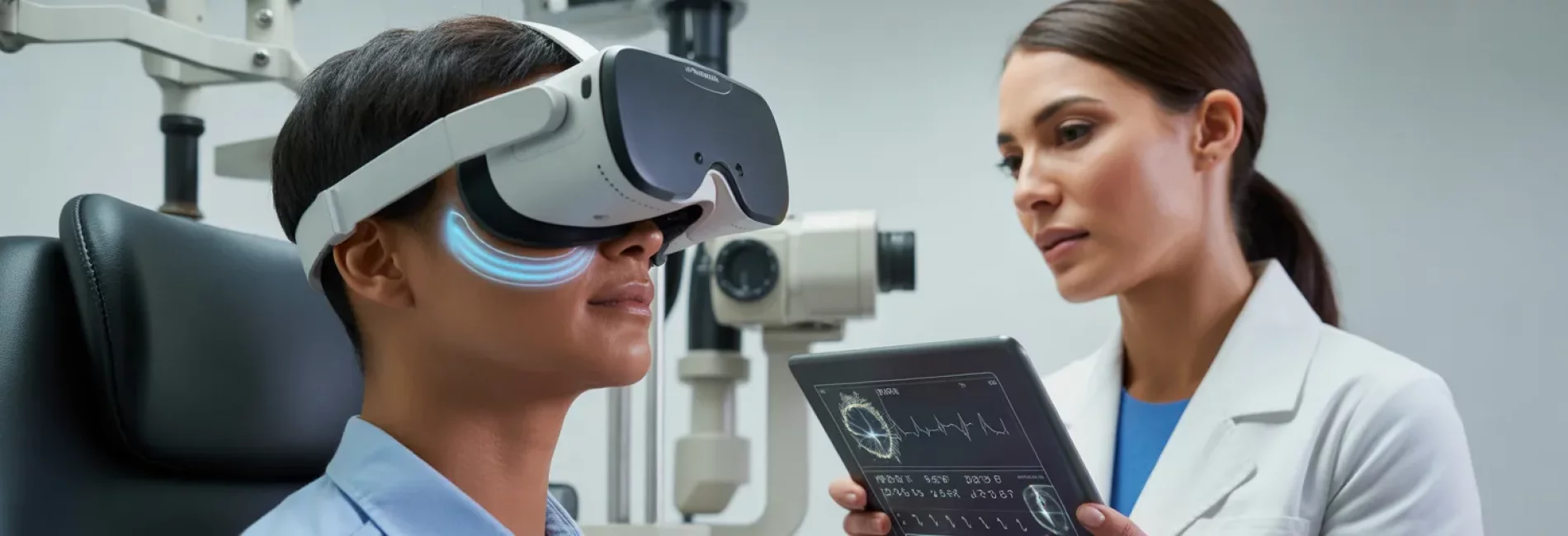
Neuro-Ocular Diagnostics Using Modern VR Goggles
Neuro-ocular diagnostics using modern VR goggles is an innovative examination procedure for the early detection of neurological diseases.
Until a few years ago, this specialized form of diagnostics was exclusively available at select university centers focusing on neuro-ophthalmology. The examinations were technically complex, equipment-intensive, and therefore rarely accessible.
Thanks to the latest VR technology, this highly specialized diagnostic tool is now available in a standardized form – precise, reproducible, and comfortable for patients.
What is being examined?
VR-supported neuro-ocular diagnostics allow for a differentiated analysis of:
- Eye movements
- Gaze control
- Pupil reactions (pupillometry)
- Neurovegetative functions
- Neuro-ophthalmic functions including the afferent visual pathway
The examination of neuro-ophthalmic functions provides important information about the afferent visual pathway—the nerve pathways that transmit visual stimuli from the eye to the brain.
This makes the method a diagnostic instrument that can detect, for example, eye-related disorders typical of Multiple Sclerosis.
The examination is carried out via a structured, predefined test sequence within the VR goggles.
Areas of Application
This modern diagnostic tool is used for:
- Early detection of neurodegenerative diseases: Changes in eye movements can provide indications of neurological diseases even in the early stages.
- Differentiation of Parkinson's syndromes: The precise analysis of neuro-ocular parameters supports the distinction between different forms of Parkinson's.
- Examination of the autonomic nervous system: Pupillometry allows for conclusions to be drawn regarding the function of the vegetative nervous system.
- Diagnostics for polyneuropathy: Patients with polyneuropathy also benefit from this expanded examination option.
- Advanced neuro-immunological diagnostics: The assessment of the afferent visual pathway enables, among other things, the diagnosis of typical ocular changes in Multiple Sclerosis.
Your Benefits
- State-of-the-art technology
- Standardized, objective measurement procedures
- Early-stage diagnostics
- Non-invasive examination
- High patient comfort
If you have any questions about neuro-ocular VR diagnostics or would like to know if this examination is appropriate for you, please do not hesitate to contact us.