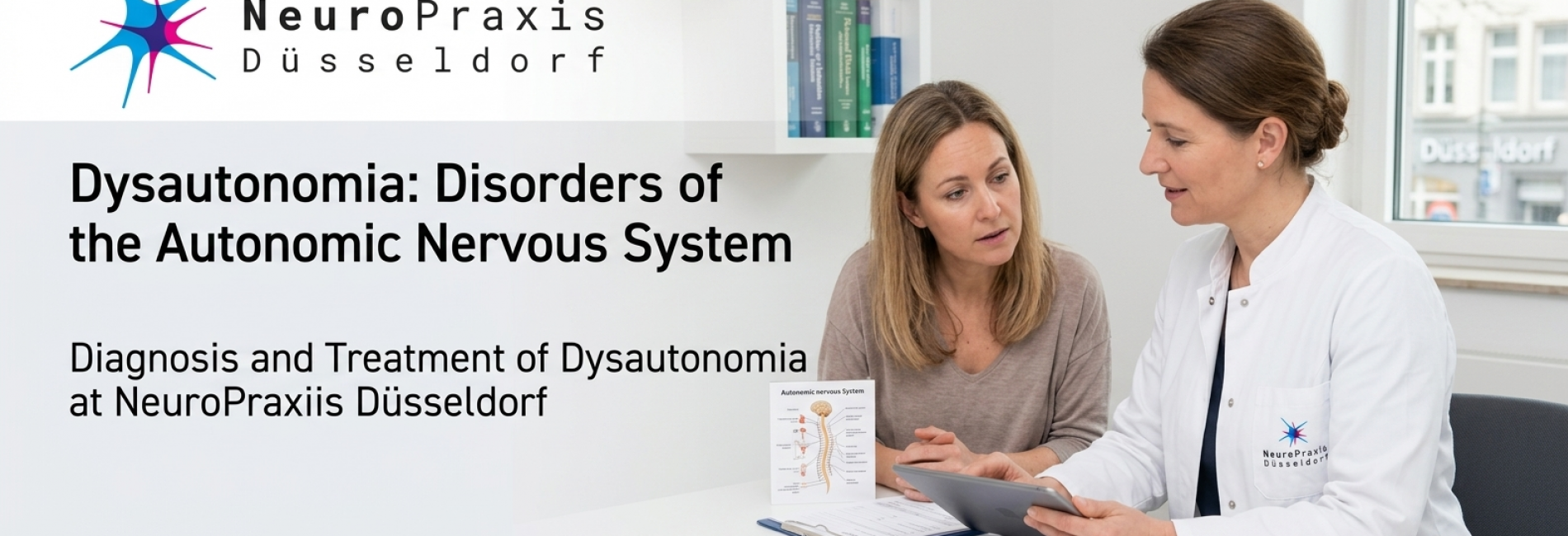
Dysautonomia: Disorders of the Autonomic Nervous System
Diagnosis and Treatment of Dysautonomia at Neuro Praxis Düsseldorf
The autonomic nervous system (ANS) controls many essential body functions automatically and without conscious effort. These include the regulation of blood pressure, heart rate, breathing, digestion, bladder function, sweating, and body temperature.
In dysautonomia, also known as autonomic dysfunction, the autonomic nervous system does not function properly. As a result, patients may develop a wide range of symptoms affecting multiple organ systems. Because symptoms are often diverse and nonspecific, dysautonomia frequently remains undiagnosed for years.
Common Symptoms of Dysautonomia
Symptoms may include:
- Dizziness and lightheadedness
- Orthostatic intolerance
- Orthostatic hypotension
- Rapid heart rate (tachycardia)
- Palpitations
- Fainting or near-fainting episodes (syncope)
- Chronic fatigue and exercise intolerance
- Brain fog, concentration difficulties, and memory problems
- Sleep disturbances
- Digestive problems
- Bladder dysfunction
- Temperature regulation problems
- Excessive or reduced sweating
- Reduced physical and mental stamina
Not all patients experience the same symptoms. The severity and pattern of symptoms can vary considerably from person to person.
Causes of Dysautonomia
Dysautonomia may occur as a primary disorder or develop secondary to other neurological, autoimmune, metabolic, or systemic diseases.
Common causes include:
- Autonomic neuropathy
- Parkinson’s disease and related disorders
- Diabetes mellitus
- Autoimmune diseases
- Long COVID and post-COVID syndrome
- Small Fiber Neuropathy (SFN)
- Postural Orthostatic Tachycardia Syndrome (POTS)
- Neurodegenerative disorders
- Certain medications
Specialized Autonomic Testing
Neuro Praxis Düsseldorf has particular expertise in the diagnosis of autonomic nervous system disorders.
Our evaluation focuses on identifying abnormalities in blood pressure regulation, heart rate control, and other autonomic functions. The goal is to determine the underlying cause of symptoms and differentiate between various forms of dysautonomia, including POTS, orthostatic hypotension, autonomic neuropathy, and other autonomic disorders.
Individualized Treatment for Dysautonomia
Treatment depends on the underlying cause and the patient's individual symptoms.
Management may include:
- Treatment of the underlying disease
- Measures to improve blood pressure regulation
- Lifestyle modifications
- Fluid and salt optimization
- Physical counter-pressure maneuvers
- Targeted medication when appropriate
Through comprehensive diagnostic evaluation and an individualized treatment plan, symptoms can often be significantly reduced and quality of life improved.
Expertise in Dysautonomia, POTS and Autonomic Disorders
Neuro Praxis Düsseldorf specializes in the diagnosis and treatment of:
- Dysautonomia
- Autonomic nervous system disorders
- Autonomic dysfunction
- Postural Orthostatic Tachycardia Syndrome (POTS)
- Orthostatic hypotension
- Autonomic neuropathy
- Small Fiber Neuropathy
- Long COVID-related autonomic dysfunction
- Vasovagal syncope and recurrent fainting
We provide specialized evaluation for patients experiencing dizziness, fatigue, palpitations, blood pressure regulation problems, exercise intolerance, and other symptoms related to autonomic nervous system dysfunction.