Evoked Potentials
Evoked Potentials (EP)
Evoked potentials (EP) are a well-established neurological diagnostic test used to assess the function of nerve pathways connecting the sensory organs, spinal cord, and brain. During the examination, tiny electrical signals generated in response to specific sensory or electrical stimuli are recorded and analyzed. This allows us to determine whether nerve impulses are being transmitted normally or whether conduction is slowed or impaired.
The examination can detect functional abnormalities of the central and peripheral nervous system at an early stage—often before they become apparent on other diagnostic tests.
When are evoked potentials used?
Evoked potentials are an important diagnostic tool for evaluating conditions such as:
-
Multiple sclerosis (MS)
-
Disorders of the spinal cord
-
Peripheral nerve damage
-
Stroke
-
Optic nerve disorders
-
Hearing disorders
-
Diseases affecting sensory nerve pathways
Depending on the clinical question, different types of evoked potentials may be performed, including:
Visual Evoked Potentials (VEP) – assessing the visual pathways
Auditory Evoked Potentials (AEP/BERA) – assessing the hearing pathways and brainstem
Somatosensory Evoked Potentials (SEP) – assessing sensory pathways from the limbs to the brain
How is the examination performed?
Depending on the diagnostic purpose, the examination uses visual stimuli (flashing lights), auditory stimuli (clicking sounds), or mild electrical stimulation applied to an arm or leg. The resulting responses of the nervous system are recorded painlessly using electrodes placed on the scalp or skin.
During somatosensory evoked potential (SEP) testing, signals generated by stimulation of the arm typically reach the brain after approximately 20 milliseconds, while signals from the leg arrive after approximately 40 milliseconds. Measuring these conduction times allows us to evaluate the integrity and function of the sensory nerve pathways.
Is the examination painful?
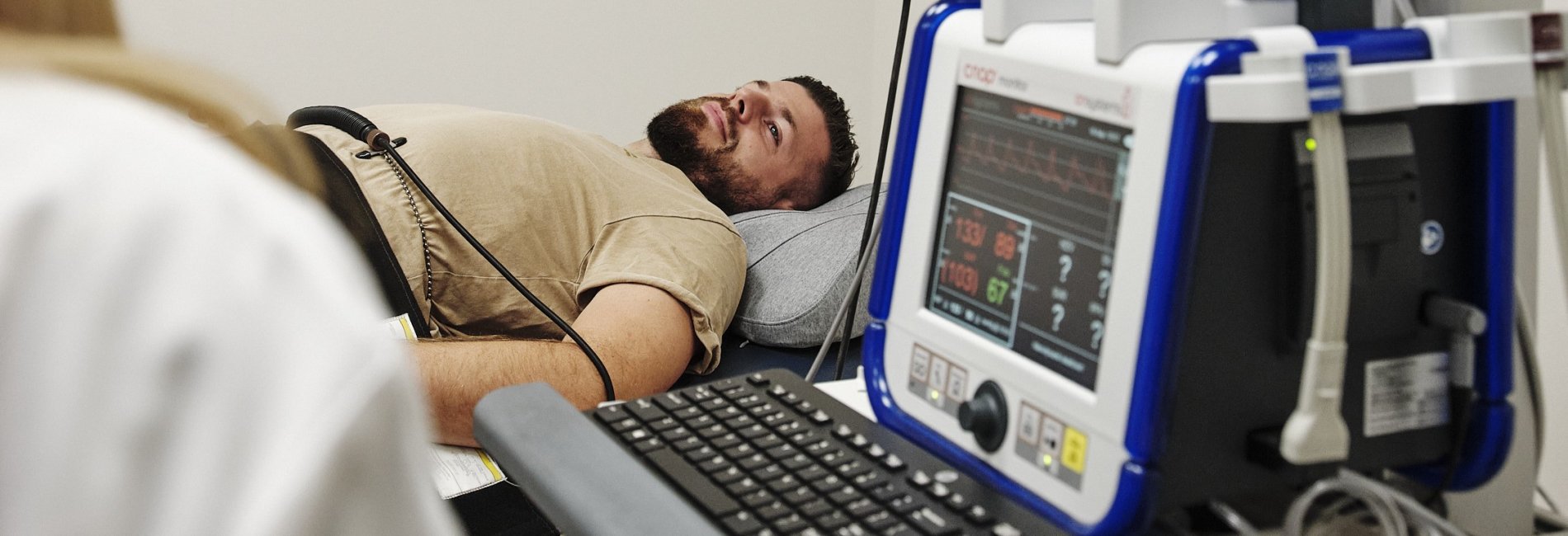
Evoked potential testing is generally well tolerated. During the examination, you will be asked to remain as relaxed as possible while sitting or lying comfortably. The electrical stimulation is usually perceived as a mild tapping or tingling sensation and is generally not considered painful.
Early detection of functional disorders of the nervous system often enables timely treatment and may help slow the progression of neurological diseases or prevent further complications.

"Do you have any questions about our services or would you like to make an appointment? We would also be happy to advise you in our private medical video consultation"